Best Walking Shoes for Everyday Miles
The most useful walking shoe feels secure at your heel and unremarkable after an hour.
Choose around the routine, not the feature list.
- Best for
- Daily walkers, commuters and travelers seeking comfort on pavement and indoor floors.
- Skip if
- You need condition-specific footwear or technical trail grip; a qualified professional can guide unusual pain or gait concerns.
Three useful starting points
These are product types, not claims that we personally tested a specific model.
Cushioned neutral walking shoe
Balances comfort, flexibility and versatile styling.
Water-resistant city walking shoe
Handles light rain and dirty sidewalks more easily.
Lightweight flexible sneaker
Fits into travel bags and works for casual days.
Best Walking Shoes for Everyday Miles
A walking shoe proves itself after the first excitement wears off: on the third errand, during an airport connection, or halfway through a neighborhood loop. Comfort is personal, but fit signals are practical and observable.
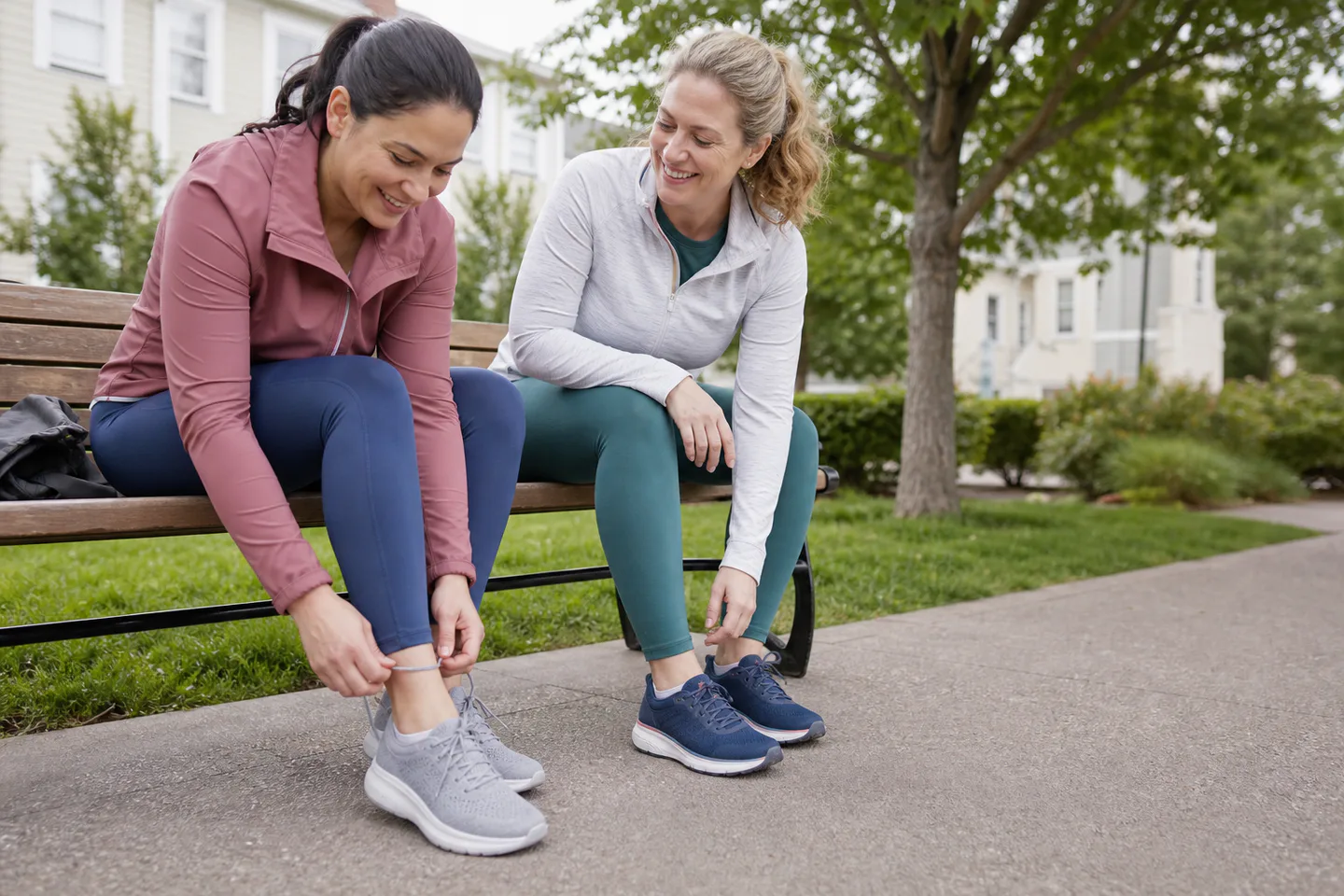
Shop near the time of day you usually walk, wear your normal socks and test both feet. Your toes need room without the heel sliding, and the upper should flex without pressing a hot spot.
What to consider before you buy
Heel hold should feel secure
A little movement can be normal, but repeated slipping causes friction. Try alternate lacing before assuming a size change will solve everything.
Toe space needs both width and length
Toes should spread naturally and avoid the front on descents. Wide sizes are more useful than simply sizing up when the forefoot is cramped.
Cushioning is not the same as support
Very soft foam feels pleasant in a short try-on but may not suit every gait. Look for a stable platform as well as softness.
Outsole texture matches the route
Smooth indoor floors, wet sidewalks and gravel paths need different traction. Choose for the surface you encounter most.
Match the choice to real life
The same product category can reward very different priorities. Use the situation closest to your week as the first filter, then compare details.
- For commuting, consider an outsole that handles rain and an upper that still works with office clothing.
- For travel, break shoes in before departure and pack a second pair with a different pressure pattern.
- For fitness walking, prioritize locked-in fit and durability over a minimal fashion sole.
Write down the two problems you need the purchase to solve and one compromise you will accept. That short list is more useful than comparing every possible feature.
What not to overpay for
A higher price can buy better materials, support or convenience, but only when those benefits fit your routine. Avoid paying for features that add setup, storage or maintenance without removing a real frustration.
- Assuming your size is identical across every brand and shape.
- Keeping a pair that creates numbness or a repeated hot spot indoors.
- Buying technical trail shoes for mostly smooth city pavement without needing the extra tread.
Frequently asked questions
Can running shoes work for walking?
Yes, many do. The best choice is the pair that fits your foot, pace and surface comfortably.
How much toe room is enough?
You need space in front of the longest toe and enough width to spread without pressure. Exact fit varies by foot.
When should I replace walking shoes?
Replace them when cushioning feels uneven, tread is worn smooth or the upper no longer holds your foot securely.
A note about our links
Retailer buttons lead to current search results so you can compare available options. No affiliate tracking ID was supplied for this site at launch. If a link later becomes an affiliate link, a commission may be earned at no additional cost to you; our editorial criteria remain the same.