Best Dehumidifiers for Basements
Match capacity, drainage and low-temperature behavior to the room you actually need to manage.
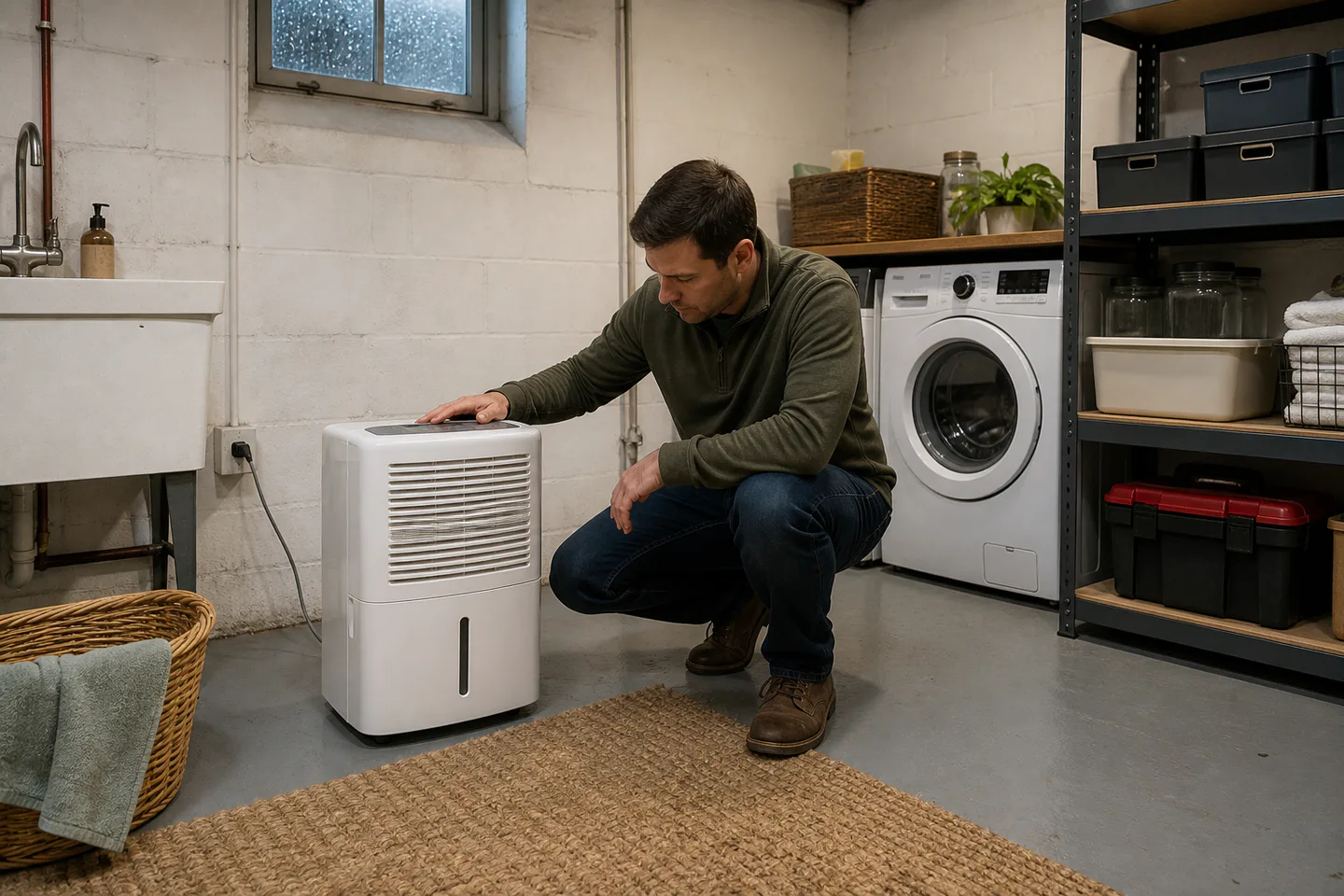
Choose around the routine, not the feature list.
- Best for
- Basements and laundry areas with recurring dampness after leaks and structural moisture sources have been addressed.
- Skip if
- There is active water intrusion, flooding or visible widespread mold that requires repair or professional remediation.
Three useful starting points
These are product types, not claims that we personally tested a specific model.
Medium-capacity dehumidifier with hose drain
Balances moisture removal and manageable size for many basements.
Dehumidifier with built-in pump
Can move collected water up to a sink or window.
Compact unit with washable filter
Fits tighter spaces and handles moderate seasonal dampness.
Best Dehumidifiers for Basements
A dehumidifier helps manage moisture in the air; it does not repair a leaking foundation or stop water at the source. Once drainage and obvious leaks are addressed, the right machine can make a basement feel less clammy and help you monitor conditions.
Choose around drainage first. Carrying a full bucket up stairs every day changes whether the machine runs consistently, so a nearby drain or pump option may matter more than another control-panel feature.
What to consider before you buy
Room conditions affect capacity
Square footage is only a starting point. Temperature, dampness, ceiling height, laundry and open connections to other rooms all change the load.
Continuous drainage needs a real route
Gravity hoses must slope downward without kinks. A pump is useful only when the discharge path is allowed and secure.
Low-temperature operation matters
Cool basements can cause frost on coils. Check the operating range and automatic defrost behavior for your seasonal conditions.
Noise and heat are part of operation
Dehumidifiers produce sound and add some heat to a room. Placement away from bedrooms and with clear airflow improves the experience.
Match the choice to real life
The same product category can reward very different priorities. Use the situation closest to your week as the first filter, then compare details.
- For a laundry basement, schedule operation around drying clothes and keep lint away from the intake.
- For seasonal dampness, use a separate humidity monitor to learn when the unit is actually needed.
- For continuous drainage, secure the hose and verify the path after moving or cleaning the unit.
Write down the two problems you need the purchase to solve and one compromise you will accept. That short list is more useful than comparing every possible feature.
What not to overpay for
A higher price can buy better materials, support or convenience, but only when those benefits fit your routine. Avoid paying for features that add setup, storage or maintenance without removing a real frustration.
- Using a dehumidifier as a substitute for fixing water entry.
- Choosing capacity from square footage alone.
- Running a kinked hose and assuming the bucket will never fill.
Frequently asked questions
What humidity should a basement be?
Comfort and building guidance vary, but persistently high humidity deserves attention. Use a reliable hygrometer and follow local expert guidance.
Can I leave a dehumidifier running?
Continuous operation is common when the unit, drain and outlet are set up according to instructions. Inspect filters and drainage regularly.
Why does the room feel warmer?
Dehumidifiers release heat while removing moisture. That is normal, though blocked airflow can worsen performance.
A note about our links
Retailer buttons lead to current search results so you can compare available options. No affiliate tracking ID was supplied for this site at launch. If a link later becomes an affiliate link, a commission may be earned at no additional cost to you; our editorial criteria remain the same.